


History
The Shroud of Turin*
Is the Shroud of Turin really the burial cloth of Jesus? A young friend's question sent one writer digging into the dating controversy, the blood evidence, and how its image was even formed.
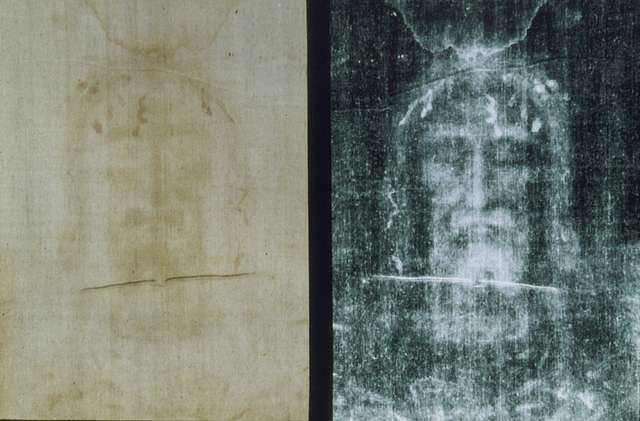
Recently a young friend asked me what I thought about the Shroud of Turin. The Shroud of Turin, in case you’re not familiar with it, is purported to be the burial cloth of Jesus.
National Geographic Magazine(June 1980) labeled it: “One of the most perplexing enigmas of modern times.”
To be clear, neither my faith nor the Christian faith stands or falls on whether or not the Shroud is authentic. Personally, I’ve always been agnostic about it. But at the prompting of my young friend I did a more in-depth look at it, and here is a brief overview of some of what I learned.
What it is: A centuries-old linen cloth bearing the image of a crucified man. The faint image on the cloth depicts a gaunt man 5’6’-6’1”. He has markings on his body corresponding to the way the Bible describes the trials and crucifixion of Jesus – thorn marks on his head, bruises on his shoulders, lacerations on his back. It is housed in the Cathedral of St. John the Baptist in Turin, Italy. And it is the most studied artifact in human history.
The age of the Shroud: In 1988 an international team of scientists dated the Shroud using the carbon-14 technique. They concluded that the fabric originated between 1260 AD and 1390 AD. This would rule it out as the burial shroud of Christ and led many people to dismiss the Shroud as a clever medieval hoax.
But some experts challenged this conclusion on various grounds and also claimed that this study was not properly controlled because of contamination of the Shroud. Also, the samples they used were collected from a single location, and that piece may have been added to the Shroud later to repair it after it was burned in a fire in 1352 – which is roughly how old that 1988 study said it was.
In the most recent study, researchers from Italy’s Institute of Crystallography applied a much more advanced X-ray technique to study the Shroud. That analysis dates the Shroud’s origin to the first century AD, supporting its authenticity.
Those researchers also found that their analysis of the material in the Shroud was consistent with the analysis of linens from Israel in the first century AD. But when the Shroud was compared with linens from the medieval period (1260-1390 AD) there was no similarity.
“We can conclude for now that the Shroud image is that of a real human form of a scourged, crucified man. It is not the product of an artist.” – Shroud of Turin Research Project Final Report, 1981.
Further:
•The dimensions of the cloth match the measurement used by Jewish law and custom for a burial cloth.
•The composition of the cloth: The material of the threads is consistent with known first-century plants.
•It has pollen grains on it unique to Judea.
•There are Roman coins on the eyes in the image, minted by Pontius Pilate in 29 AD.
There are real blood stains on it:
•Like the markings on his body, they match the descriptions of the sufferings of Jesus in the Gospels.
•The blood type is a very rare AB+. Apparently people with this blood type are universal plasma donors.
•The stains match descriptions of the Passion of Jesus in the Gospels.
•The blood particles reveal a high content of bilirubin. This is significant for two reasons: 1. It is consistent with bodily response to extreme trauma (so a dead body could not have been used to create the image); and 2. Blood with high bilirubin content stays red over time and does not turn dark brown (consistent with stains on the Shroud).
•The blood imprints precede the formation of the image.
•There are correspondences with another relic, the Sudarium Christi: similar pollen grains; 124 exact matches to wounds on the Shroud; the same AB blood type.
•The Shroud is a precise photographic negative (on non-photographically sensitive cloth). This obviously is hundreds of years before cameras and photographs and negatives were invented.
•The image was not produced by paint, dye, vapors, or scorching.
•The image is unique: no other image in the world has its distinctive characteristics. The only known explanation for the formation of the image is an intense burst of vacuum ultraviolet radiation (equivalent to the output of 14K excimer lasers) emitted from every three-dimensional point of the body in the Shroud.(Emphases added.)
Skeptics abound, but so far no one has come up with a credible explanation of how the relic might have been forged. And in spite of a $1 million offer, no one has yet produced a similar object.
Again: Neither my faith nor the Christian faith depends on whether or not the Shroud is authentic, but I’m leaning more in the direction of it being authentic … until someone can explain how it was made.
The Shroud is either the actual burial cloth of Jesus Christ, or the most ingenious, elaborate hoax in human history.
What do you think?
Kent
*Compiled from numerous sources.
Frequently asked questions
What is the Shroud of Turin?
How old is the Shroud of Turin?
What is the blood evidence on the Shroud of Turin?
How was the image on the Shroud of Turin made?
Pastoral writing from the team at Christchurch Miami — a faith family on mission in Kendall, Miami.