


Apologetics
Moonstruck
The moon is 400 times smaller than the sun - and 400 times closer, so it covers the sun perfectly during an eclipse. Here is what that precise design reveals about the Creator.
As you probably recall, on April 8 2024, a total eclipse graced a portion of the North American skies, completely blocking out the sun in the “totality zone” for 4 minutes, 28 seconds. Millions of people in that zone stared in awe (wearing spiffy, approved solar eclipse sunglasses, of course), as people all over the world have done during these events for thousands of years.
I learned some things during this eclipse I never knew before.* Perhaps you’ve never understood them either.** Here goes:
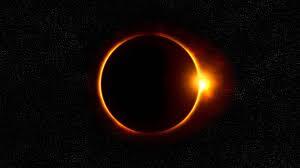
The sun is millions of times larger than the moon … and yet the moon, when it passes in front of the sun as it did that day, blocks it perfectly. All we are able to see during a total eclipse is the sun’s corona, what some describe as the “diamond ring” effect.
(Editor’s note: For the young man who plans ahead, a total eclipse would be the perfect time to propose. If she says yes, they will always remember exactly when, where and how they got engaged. And if she says no, he can slink away in the darkness and never have to see her again. But I digress.)
How does that happen – our moon being a tiny fraction of the size of the sun, yet it is the exact size to block it out like that? I’m glad you asked.
Try this on for size (pun intended): The precise correlation of the apparent sizes of the sun and the moon results from the fact that while the sun is roughly 400X larger in diameter, it is also approximately 400X farther from the Earth.** The slight difference between these measurements allows us to observe the sun’s corona during a total solar eclipse.
According to Jay Richards, co-author of The Privileged Planet: It is because of total solar eclipses we were able to confirm Einstein’s general theory of relativity because of the bending of starlight around the edge of a star – the sun – during a total eclipse. We were also able to figure out what stars are made of because of total eclipses.
But wait, there’s more ….
There are 65 major moons in our solar system and many smaller ones. But we Earth-creatures are the only ones who can enjoy total solar eclipses where our moon just barely covers the sun’s surface. If there were life forms on Mars or Jupiter, they would not see total eclipses because the size of their moons is not in the right proportion in relation to the size of the sun.
So: the best place to view total solar eclipses in our solar system is – just where there happens to be intelligent observers to see them, namely, Earth. The only planet that could provide perfect total solar eclipses from the point of view of an observer … “just happens” to be ours.
Our perfectly sized, perfectly situated moon also plays a key role in making Earth habitable for humans and other carbon-based life forms by stabilizing the tilt of its axis. That gives our planet a more-or-less stable climate.
The climate in South Florida is very stable: hot, humid and occasionally rather windy. Make that extremely windy sometimes around August and September, you know?
The moon also helps regulate our ocean tides. Mars’ two moons are much too small to do that, and as a result, Mars wobbles on its axis way more than Earth does. (Word is the other planets tease it with that “Weebles wobble” thing.) That’s a rough break for Martians, although I understand Martian surfers are totally stoked about it.
Jay Richards says this unique solar experience is evidence of an intentional Creator. Order never comes from chaos without intelligence.
But wait, there’s still more ….
Observing solar eclipses has helped in making or confirming several other major scientific discoveries. Those discoveries would be hard to make on a planet without total eclipses.
Eclipses help us unlock the mystery of stars. Scientists since Isaac Newton (1666) have known that sunlight splits into the colors of the spectrum when passed through a prism. But astronomers only began to observe solar eclipses with spectroscopes, which use prisms, in the 19th century. This allowed them to discover how the sun produces its light.
All of this gave astronomers a way to figure out the structure of the sun itself. Since the sun looks larger from the earth than from any other planet with a moon, we can discern finer details about its composition and corona than we could from any other planet.
This knowledge, in turn, has allowed astronomers to make sense of the light from the distant stars. Total eclipses, then, have been a key that allows us to unlock the physics of stars. And all we have to do is stand still, look up in awe and wonder, and be humble enough to recognize the absolute miracle of life on our beautiful, magnificent, orderly, unique – and uniquely designed – privileged planet.
Once again, in the words of Jay Richards: This unique solar experience is evidence of an intentional Creator. Order never comes from chaos without intelligence.
Or, as an earlier writer put it around 3000 years ago:
Psalm 19:1:
The heavens are telling of the glory of God;
And their expanse is declaring the work of his hands.
Kent
*I am very much indebted to the Discovery Institute for most of this information. Recently I attended (online) “The Dallas Conference on Science and Faith.” It was fascinating – at least, the parts I understood were. Some parts I think you needed an advanced degree in molecular and cellular biology and/or astrophysics to grasp, and darn it all, I skipped those classes in seminary.
**For those of you (science nerds) who are just dying to know: the sun is approximately 865,370 miles in diameter; the moon approximately 2,159.1 miles … so the sun’s diameter is 401X bigger. And the sun is approximately 93,120,000 miles from Earth; the moon approximately 238,900 miles … so the sun is 390X farther away. The slight difference between these factors allows us to observe the sun’s corona during a total solar eclipse – a critical element for cosmological discovery.
Echoing Jay Richards: All of this is evidence of an intentional, intelligent, pre-existing Creator. You can’t get something from nothing without a Creator, design from randomness without a Designer, and order from chaos without Intelligence.
**Testing Einstein’s Theory
But wait, there’s more …. Eclipses have done far more than help astronomers decipher starlight.
In the early 20th century, Albert Einstein predicted in his General Theory of Relativity that light passing near a massive object like the sun would bend. To test his theory, astronomers needed to measure the changes in the positions of starlight passing near the sun’s edge compared to their positions months later when the sun was in another part of the sky.
Have you ever tried to look at starlight right next to the edge of the sun? It’s a bad idea and wouldn’t work anyway. The test could only be done during a total solar eclipse. That’s why, during the 1919 eclipse, two teams of astronomers set out to confirm Einstein’s theory. They succeeded, as did other astronomers during later eclipses. This led scientists to embrace Einstein’s theory, which is the basis of our current knowledge of the universe.
https://washingtonstand.com/podcast/ep-88-solar-eclipse—doomsday-or-intentional-design
https://evolutionnews.org/2024/04/to-understand-the-meaning-of-a-solar-eclipse/
Frequently asked questions
Why does the moon perfectly cover the sun during a total solar eclipse?
How have solar eclipses helped scientific discovery?
What does Psalm 19:1 say about creation?
How does the moon make Earth habitable?
Pastoral writing from the team at Christchurch Miami — a faith family on mission in Kendall, Miami.