



History
How to Study the Bible
A friend once asked how to study the Bible, especially its hardest passages. Pastor Kent Keller shares ten practical principles, from choosing a translation to reading every page through grace.
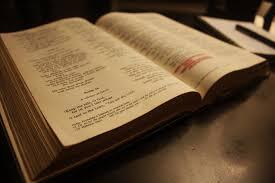
A friend once asked how I study the Bible, and if I could give her some guidance in how to do it – especially when dealing with some of the more difficult, problematic portions. This is, with minor revisions, what I wrote for her. Maybe it will be of help to you as well.
First: Find a Bible you can read and understand. The King James Version (KJV), New King James Version (NKJV), New American Standard Bible (NASB), English Standard Version (ESV), Holman Christian Standard Bible (HCSB), and New International Version (NIV) 1984 edition are fine, if you understand what you’re reading; not if you don’t. (I’m not at all impressed w/ the newest NIV.) If need be, read the New Living Translation (NLT) or The Message. Just read it. A good study Bible, like the Spirit of the Reformation Study Bible, the Life Application Study Bible (in a number of different translations), and the HCSB Apologetics Study Bible can be a great help. (In the interests of full disclosure, I have worked on both the Student’s Life Application Study Bible and the HCSB Apologetics Study Bible, so I am not an objective, disinterested observer or commenter. I think these two study Bibles are tremendous for teenagers, college students and young adults … and maybe not-so-young adults.)
Depending on your level of experience and/or time as a follower of Jesus, I would not recommend starting in Genesis; maybe not in the Old Testament at all. Start with Matthew, John or 1 John. The Psalms are wonderful for devotional reading, but it can be difficult to extract principles from them. That’s not really why they were written. They’re love songs and heartfelt cries to God, and beautiful promises from Him and insights into His character.
Second: Pray and ask God to help you understand His Word. Tell Him if you find it difficult. Tell Him if you don’t even want to do it at all. Ask His grace and illumination to help you understand and apply His Word to your life. Then:
- Read the passage (or chapter or verse). If it’s difficult or confusing, re-read it; several times if need be. What is the plain, face-value meaning of the text? Often all it takes is a careful reading in context to clarify a perplexing passage.
- The whole Bible is God-centered, not man-centered. It is not about us; it’s about God and His unfolding plan of redemption from Creation to re-Creation. We’re important; we’re just not the most important thing in the Bible. God is.
- The whole Bible should be understood in light of the coming of Jesus. Luke 24:25-27; John 5:39-40; Acts 3:17-23; Acts 26:19-23; Acts 28:23-24; Hebrews 1:1-2.
- If you do not know Jesus, you cannot truly understand the Bible. He is the living Word who is the focus and fulfillment of the written Word. Until we know Jesus the Holy Spirit cannot “throw the switch” and illuminate our minds. Luke 24:13-27; 1 Corinthians 2:6-16.
- If you discover a meaning or interpretation in the Bible no one else in all church history has ever come up with, go back and read it again. You could be right … but you’re not. 1Timothy 6:3-5; 2 Timothy 2:23; 2 Peter 1:16-21.
- Context is key. Many times a difficult or troubling passage becomes clear(er) when you consider what comes before and/or follows after it. Ex: 1 John 3:4-10.
- The earlier passages / books should be understood in light of the later. The Old Testament should be understood in light of the New. Ex: Understand all the OT laws and rules governing the sacrifices in light of Hebrews 9-10.
- Difficult or seemingly contradictory passages need to be understood in the light of clearer passages. Ex: Hebrews 6; John 6:35-40; Philippians 1:6.
- Commentaries may help. Check with an older or more mature Christian to make sure you’re using a good one. For the younger / less experienced Christian, The Expositor’s Bible Commentaries, Tyndale New Testament Commentaries, Life Application Bible Commentaries and NIV Application Commentaries are good. For the older / more experienced Christian, you probably already have your favorites, but I can recommend the New International Old and New Testament Commentaries, Baker New Testament Commentaries and (of course) Calvin’s Commentaries. There are numerous other commentaries on individual books (like Richard Pratt on 1 and 2 Chronicles; EJ Young on Isaiah; FF Bruce on John; Martyn Lloyd-Jones’ commentaries – sermon transcriptions, actually – on Romans and Ephesians; etc.) that are excellent. If you are a serious, academically trained Bible scholar … you probably don’t need my input.
- Grace rules. Romans 8:1-2; Ephesians 2:8-10. Read everything through the grid of God’s grace. When you cannot understand what God is doing, think in terms of the Father-Child relationship. God is a good Father. Remember that when having difficulty trying to discern what a passage says about His attitude toward and treatment of us.
The Bible is our family treasure, our heirloom from our Father, the written Word which testifies to the living Word, Jesus:
- The Old Testament points ahead to the coming of the Messiah, the Christ;
- the Gospels point to and describe His incarnation, His time of earthly ministry; and
- the book of Acts and the rest of the New Testament point back to and expound upon His life, work and ministry among us – and ahead to His coming again.
I hope this is helpful. Let me know if it is, where it could be improved, and what tips you have for helping to understand The Greatest Book Ever Written.
Kent
Frequently asked questions
How should a beginner start studying the Bible?
What is the most important principle for understanding the Bible?
What do you do when a Bible passage is confusing or seems contradictory?
Why is grace the lens for reading the whole Bible?
Pastoral writing from the team at Christchurch Miami — a faith family on mission in Kendall, Miami.