


History
In Honor of Independence Day
In honor of Independence Day, Pastor Kent Keller gathers the founders' own words on God, liberty, and the purpose of government — beginning with the Declaration itself.
July 1, 2026 · by Pastor Kent Keller, Christchurch Miami
In honor of Independence Day, let us thank God for His blessings to us in this nation - and let us remember, in their own words, what those who built and led this country believed about God, liberty, and the purpose of government.
The Declaration of Independence
When in the Course of human events, it becomes necessary for one people to dissolve the political bands which have connected them with another, and to assume among the powers of the earth, the separate and equal station to which the Laws of Nature and of Nature’s God entitle them, a decent respect to the opinions of mankind requires that they should declare the causes which impel them to the separation.
We hold these truths to be self-evident, that all men are created equal, that they are endowed by their Creator with certain unalienable Rights, that among these are Life, Liberty and the pursuit of Happiness…
- The Declaration of Independence, July 4, 1776 · read the full text
The First Amendment to the Constitution
Congress shall make no law respecting an establishment of religion, or prohibiting the free exercise thereof; or abridging the freedom of speech, or of the press; or the right of the people peaceably to assemble, and to petition the government for a redress of grievances.
- First Amendment, U.S. Constitution · read the full text
In Their Own Words: God, Liberty & Government
Each speaker below is linked to their biography, and each quotation to a source where you can read it in context.
“If thou wouldst rule well, thou must rule for God, and to do that, thou must be ruled by Him. Those who will not be governed by God will be ruled by tyrants.”
- William Penn, 1681 · source
“Neither the wisest constitution nor the wisest laws will secure the liberty and happiness of a people whose manners are universally corrupt.”
- Samuel Adams, 1749 · source
“I desire to bless and praise the name of God most high for appointing me my birth in a land of Gospel Light where the glorious tidings of a Savior and of pardon and salvation through Him have been continually sounding in mine ears.”
- Robert Treat Paine, signer of the Declaration of Independence · source
“Without morals a republic cannot subsist any length of time; they, therefore, who are decrying the Christian religion, whose morality is so sublime and pure - and which insures to the good eternal happiness - are undermining the solid foundation of morals, the best security for the duration of free governments.”
- Charles Carroll, U.S. Senator for Maryland and the longest-lived signer of the Declaration of Independence · source
“An appeal to arms and the God of hosts is all that is left us. But we shall not fight our battle alone. There is a just God that presides over the destinies of nations. The battle, sir, is not to the strong alone; it is to the vigilant, the active, the brave. Is life so dear or peace so sweet as to be purchased at the price of chains and slavery? Forbid it, Almighty God. I know not what course others may take, but as for me, give me liberty, or give me death.”
- Patrick Henry, 1775 · source
“There is not a single instance in history in which civil liberty was lost, and religious liberty preserved entire.”
- John Witherspoon, 1776, signer of the Declaration of Independence (the only clergyman to do so) · source
“There must be religion. When that ligament is torn, society is disjointed and its members perish… the most important of all lessons is the denunciation of ruin to every state that rejects the precepts of religion.”
- Gouverneur Morris, signer of the Constitution · source
“I have been alternately called an aristocrat and a democrat. I am now neither. I am a Christocrat. I believe all power will always fail of producing order and happiness in the hands of man. He alone Who created and redeemed man is qualified to govern him.”
- Benjamin Rush, signer of the Declaration of Independence · source
“Can the liberties of a nation be thought secure when we have removed their only firm basis, a conviction in the minds of the people that these liberties are the gift of God? That they are not to be violated but with His wrath?”
- Thomas Jefferson, 1781, Notes on the State of Virginia · source
“The interposition of Divine Providence in our favour hath been most abundantly and most graciously manifested, and the Citizens of these United States have every reason for praise and gratitude to the God of their salvation.”
- John Hancock, signer of the Declaration of Independence, 1783 · source
“The Religion then of every man must be left to the conviction and conscience of every man: and it is the right of every man to exercise it as these may dictate.”
- James Madison, 1785, Memorial and Remonstrance · source
“God governs in the affairs of man. And if a sparrow cannot fall to the ground without His notice, is it probable that an empire can rise without His aid?”
- Benjamin Franklin, 1787, at the Constitutional Convention · source
“We can only depend on the all-powerful influence of the Spirit of God, Whose divine aid and assistance it becomes us as a Christian people most devoutly to implore. Therefore, I move that some minister of the Gospel be requested to attend this Congress every morning… in order to open the meeting with prayer.”
- Elias Boudinot, delegate to the Continental Congress · source
“It is the duty of all nations to acknowledge the Providence of Almighty God, to obey His will, to be grateful for His benefits, and humbly to implore His protection and favor.”
- George Washington, Thanksgiving Proclamation, October 3, 1789 · source
“Of all the habits that lead to political prosperity, religion and morality are indispensable supports. In vain would that man claim the tribute of patriotism who should labor to subvert these great pillars of human happiness.”
- George Washington, Farewell Address, 1796 · source
“Except the Bible there is not a true history in the world.”
“Providence has given to our people the choice of their rulers, and it is the duty as well as the privilege and interest of our Christian nation to select and prefer Christians for their rulers.”
“The only foundation for a useful education in a republic is to be laid in religion. Without this there can be no virtue, and without virtue there can be no liberty, and liberty is the object and life of all republican governments.”
- Benjamin Rush, signer of the Declaration of Independence, 1798 · source
“Only a virtuous people are capable of freedom. As nations become more corrupt and vicious, they have more need of masters.”
- Benjamin Franklin, 1787 · source
“Our Constitution was made only for a moral and religious people. It is wholly inadequate to the government of any other.”
- John Adams, to the Massachusetts Militia, October 11, 1798 · source
“It must be felt that there is no national security but in the nation’s humble, acknowledged dependence upon God and His overruling Providence.”
“A wise and frugal government, which shall restrain men from injuring one another, which shall leave them otherwise free to regulate their own pursuits of industry and improvement, and shall not take from the mouth of labor the bread it has earned. This is the sum of good government.”
- Thomas Jefferson, First Inaugural Address, 1801 · source
“If we wish to make democracy permanent in this country, let us abide by the fundamental principles laid down in the Constitution. Let us see that the state is the servant of its people, and that the people are not the servants of the state.”
- Thomas Jefferson, attributed · source
“Honor, justice, and humanity forbid us tamely to surrender that freedom which we received from our gallant ancestors, and which our innocent posterity have a right to receive from us.”
- Thomas Jefferson, 1775, Declaration of the Causes and Necessity of Taking Up Arms · source
“I consider the government of the United States as interdicted by the Constitution from intermeddling with religious institutions, their doctrines, discipline, or exercises.”
- Thomas Jefferson, letter to Samuel Miller, 1808 · source
“I verily believe Christianity necessary to the support of civil society. One of the beautiful boasts of our municipal jurisprudence is that Christianity is a part of the Common Law… There never has been a period in which the Common Law did not recognize Christianity as laying its foundations.”
- Joseph Story, U.S. Supreme Court Justice, Harvard address, 1829 · source
“Religion in America takes no direct part in the government of society, but it must nevertheless be regarded as the foremost of the political institutions of that country… Americans combine the notions of Christianity and of liberty so intimately in their minds that it is impossible to make them conceive the one without the other.”
- Alexis de Tocqueville, Democracy in America, 1835 · source
“The atonement of Jesus Christ is the only remedy and rest for my soul.”
- Martin Van Buren, 1860 · source
“Intoxicated with unbroken success, we have become too self-sufficient to feel the necessity of redeeming and preserving grace, too proud to pray to the God that made us!”
- Abraham Lincoln, National Fast Day Proclamation, March 30, 1863 · source
“Now, more than ever before, the people are responsible for the character of their Congress. If that body be ignorant, reckless, and corrupt, it is because the people tolerate ignorance, recklessness, and corruption. If that body be intelligent, brave, and pure, it is because the people demand these high qualities… If the next centennial does not find us a great nation… it will be because those who represent the enterprise, the culture, and the morality of the nation do not aid in controlling the political forces.”
- James A. Garfield, 1877; later President and an ordained minister of the Gospel · source
“Our laws and our institutions must necessarily be based upon and embody the teachings of the Redeemer of mankind. It is impossible that it should be otherwise; and in this sense and to this extent our civilization and our institutions are emphatically Christian… this is a Christian nation.”
- David J. Brewer, U.S. Supreme Court Justice, Church of the Holy Trinity v. United States, 1892 · source
“Our faith teaches that there is no safer reliance than upon the God of our fathers, who has so singularly favored the American people in every national trial, and who will not forsake us so long as we obey His commandments and walk humbly in His footsteps.”
- William McKinley, Inaugural Address, March 4, 1897 · source
“We are a Christian people, according to one another the equal right of religious freedom, and acknowledging with reverence the duty of obedience to the will of God.”
- George Sutherland, U.S. Supreme Court Justice, United States v. Macintosh, 1931 · source
“The fundamental basis of this nation’s laws was given to Moses on the Mount. The fundamental basis of our Bill of Rights comes from the teachings we get from Exodus and St. Matthew, from Isaiah and St. Paul… If we don’t have a proper fundamental moral background, we will finally end up with a totalitarian government which does not believe in rights for anybody except the state.”
- Harry S. Truman, 1950 · source
“We are a religious people whose institutions presuppose a Supreme Being… When the state encourages religious instruction… it follows the best of our traditions… We find no constitutional requirement which makes it necessary for government to be hostile to religion… We cannot read into the Bill of Rights such a philosophy of hostility to religion.”
- William O. Douglas, U.S. Supreme Court Justice, Zorach v. Clauson, 1952 · source
“The purpose of a devout and united people was set forth in the pages of the Bible: (1) to live in freedom, (2) to work in a prosperous land… and (3) to obey the commandments of God… This Biblical story of the Promised Land inspired the founders of America. It continues to inspire us.”
- Dwight D. Eisenhower, 1954 · source
“Without God there could be no American form of government, nor an American way of life. Recognition of the Supreme Being is the first - and most basic - expression of Americanism.”
- Dwight D. Eisenhower, 1955 · source
“…and the glory of the Lord shall be revealed, and all flesh shall see it together.”
- Isaiah 40:5 — the scripture Martin Luther King Jr. chose to close his address at the Lincoln Memorial, August 28, 1963. Standing before the nation, King took the Declaration’s promise that “all men are created equal” and traced it back past the founders to its source: a dignity given by God, not granted by government. He argued the country had written a promissory note it had not yet honored — and he made the case in the language of the prophets. King’s “I Have a Dream” address remains under copyright; it is quoted here only by way of the scripture and the founding text it draws on. Read or listen to it in full at The King Center · about the speech
“Freedom is never more than one generation away from extinction. We didn’t pass it to our children in the bloodstream. It must be fought for, protected, and handed on for them to do the same, or one day we will spend our sunset years telling our children and our children’s children what it was once like in the United States where men were free.”
- Ronald Reagan, January 5, 1967 · source
“For the West, for America, the time has come to dare to show the world that our civilized ideas, our traditions, our values, are not just a facade of strength. It is time for the world to know that our intellectual and spiritual values are rooted in the source of all strength, a belief in a Supreme Being, and a law higher than our own.”
- Ronald Reagan, 1981 · source
“To those who would crush religious freedom, our message is plain: you may jail your believers. You may close their churches, confiscate their Bibles, and harass their rabbis and priests, but you will never destroy the love of God and freedom that burns in their hearts. They will triumph over you.”
- Ronald Reagan, 1983 · source
“My kingdom is not of this world.”
Common Questions About Faith and the American Founding
Did the Founding Fathers believe in God?
Most did. At its founding the United States was roughly 98% Protestant, and figures from George Washington to Benjamin Franklin publicly invoked “divine Providence” and a “Creator.” Their beliefs ranged from orthodox Christianity to Deism, but nearly all held that human rights and public morality come from God.
Where do rights come from, according to the Declaration of Independence?
From God. The Declaration states that all people are “endowed by their Creator with certain unalienable Rights,” among them life, liberty, and the pursuit of happiness - locating the source of rights above any king or government.
What did the Founders say about religion and government?
They repeatedly tied liberty to virtue and religion. John Adams wrote that “our Constitution was made only for a moral and religious people,” and George Washington called religion and morality “indispensable supports” of political prosperity.
Is the United States a Christian nation?
It is debated. The founders drew heavily on biblical and Christian moral assumptions, and in 1892 the Supreme Court (Church of the Holy Trinity v. United States) called America “a Christian nation” in a cultural sense. At the same time, the First Amendment forbids an established religion and guarantees free exercise for people of every faith.
Does the First Amendment separate church and state?
The First Amendment prohibits Congress from establishing an official religion or prohibiting its free exercise. It protects religious liberty for all; it does not require government hostility to religion, as the Supreme Court affirmed in Zorach v. Clauson (1952).
Are all popular “Founding Father” quotes about God authentic?
No. Several widely circulated quotes are misattributed or fabricated - for example, the line “this great nation was founded… on the Gospel of Jesus Christ” attributed to Patrick Henry, and a “Ten Commandments” quote attributed to James Madison, have both been debunked by historians. The quotations on this page are attributed to verifiable primary sources.
Compiled by Dr. Kent Keller, Teaching Pastor of Christchurch Miami, for Independence Day 2026. Quotations are attributed to primary or authoritative sources; several commonly circulated but misattributed “founders’ quotes” have been intentionally omitted.
Christchurch Miami is a Presbyterian Church in America (PCA) congregation in Miami, Florida. Services are held Sundays at 11 AM at 8485 SW 112th St, Miami, FL 33156.
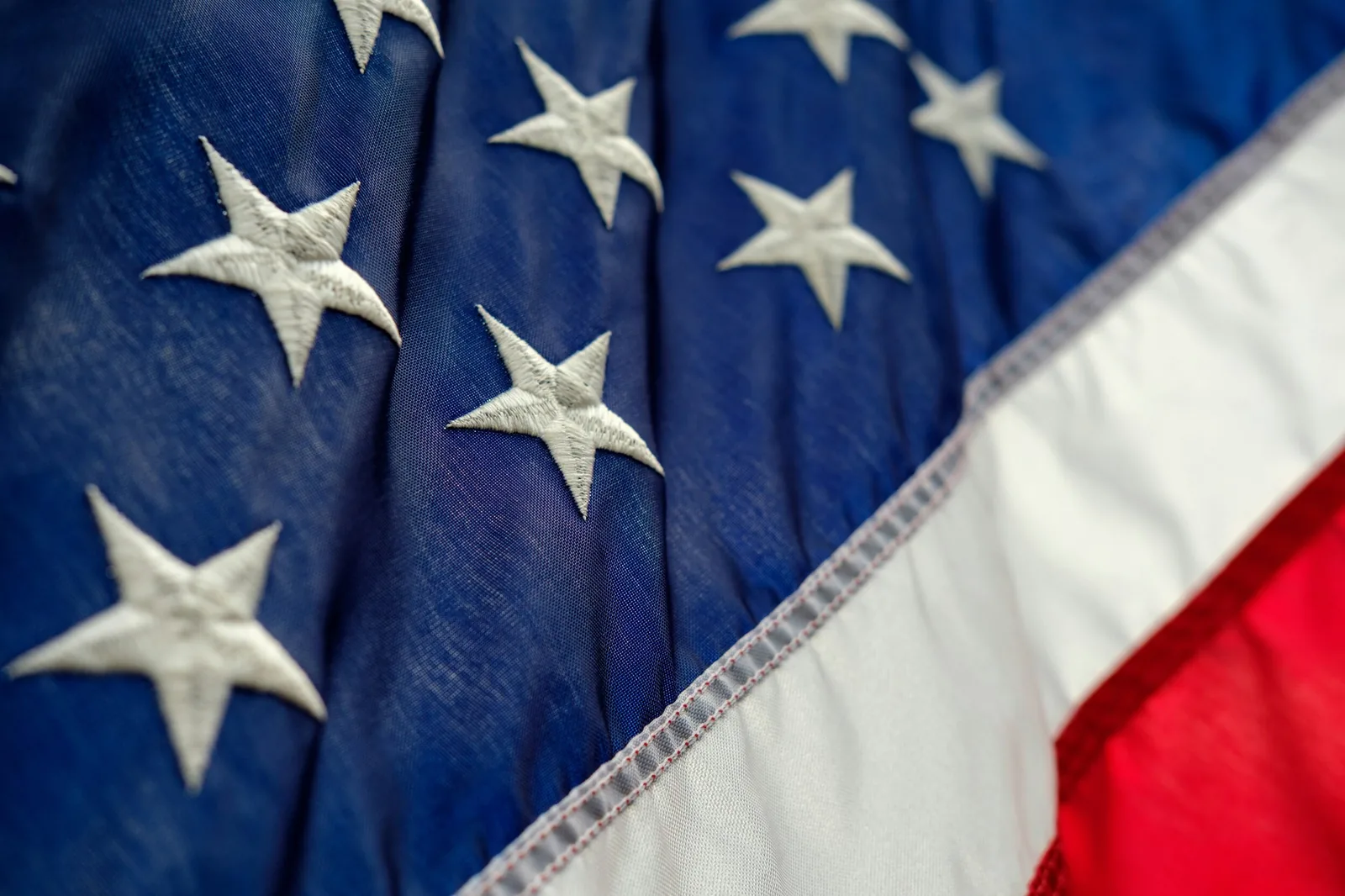
Photo by Luke Michael on Unsplash.
Pastoral writing from the team at Christchurch Miami — a faith family on mission in Kendall, Miami.