


Sermon Blog
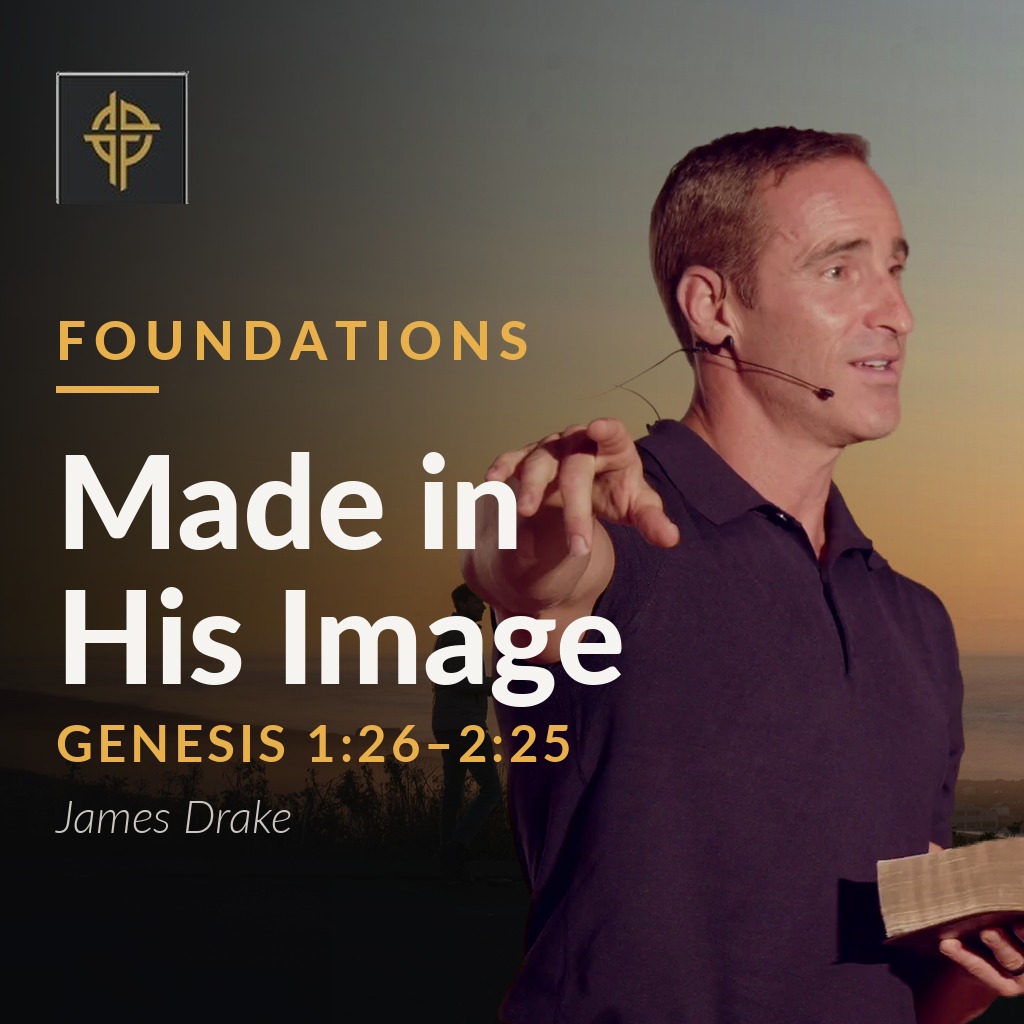
Made in His Image: Your Worth Is Received, Not Achieved
James Drake opens Genesis 1 and 2, the pinnacle of creation. You bear the image of God, which means your worth is received, not achieved, before you have done a single thing.

Photo: Dylan Taylor / Unsplash (gO4ZX8q4N6s)
What makes you valuable?
Be honest with yourself for a second, because most of us answer that question without ever saying it out loud. We answer it with our job title. Our bank account. Our GPA. The number on a scale, or the number of people who like us. We spend our whole lives building an identity out of what we do, what we own, and what other people say about us. And I’ll go first here. I’ve done it too.
But watch what happens when a baby is born.
That newborn has done nothing. Hasn’t earned a dime, hasn’t passed a test, hasn’t performed for anybody. And the parents are undone with love anyway. Why? Not because of anything the child achieved. Because of whose image that little one bears.
Church, that’s you. That’s where we’re headed this week in our Foundations series, into the pinnacle of the whole creation account.
You bear His image
Look at the text. On the sixth day, God says something He hadn’t said about anything else He made.
“Let us make man in our image, after our likeness” (Genesis 1:26). And then it happens:
So God created man in his own image, in the image of God he created him; male and female he created them. (Genesis 1:27)
Slow down on those words. Before you have produced anything at all, God stamps His own image on you. Your worth isn’t printed on the far side of your accomplishments. It’s written into you at the source.
And here’s what makes that so freeing. If your identity is received from God, then no failure and no critic can revoke it. But if your identity is achieved by you, then every bad day, every dropped ball, every unkind word is a threat to who you are. It’s the difference between an athlete stepping to the plate terrified of striking out, and one who steps up already secure, free to swing.
Now, this isn’t a license to drift, or to imagine you’re your own maker. Genesis is clear. We are the creation, not the Creator. And only the One who made you gets to say who and what you are. That’s not a cage. That’s relief.
Your worth is received, not achieved. Let me say that again so we don’t miss it. Received, not achieved.
And yet you know something is broken
If that’s true, why does life so often feel like it isn’t?
I brought something home from a deployment once, a gift I treasured, and somewhere along the way it came back to me in pieces. Now, I didn’t look at that broken thing and say it was “identifying as broken.” I said, this is not the way it’s supposed to be. And that instinct is honest. We look at the world, then we look in the mirror, and something in us insists: this is not how it was meant to be.
That ache isn’t despair. It’s memory and hope pressed together. We feel the wrongness precisely because we were made for “very good.” Look back a verse: “And God saw everything that he had made, and behold, it was very good” (Genesis 1:31). Not adequate. Not passable. Very good.
The image of God in you is defaced, but it is not erased. And the message of Genesis is not that God helps us cope with what’s broken. It’s that He will restore what once was.
He gave you a garden, not a hammock
Watch what God does with His image-bearer next. “The LORD God took the man and put him in the garden of Eden to work it and keep it” (Genesis 2:15).
Before there was any curse, before a single thorn, there was work. God didn’t hand Adam a hammock. He handed him a garden to tend.
You see, dominion isn’t about being the boss who puts everything under his feet. It’s stewardship. Adam knew the garden was never his. It was the Lord’s. And our calling is the same, to cultivate what God owns, to leave the home, the church, our corner of the world better than we found it.
Yes, work can feel like a curse on a Monday. The difficult boss. The project you dread. But Genesis is careful. The thorns are the curse. The work itself is not. Don’t confuse the two. The frustration is real, and it comes from a fallen world. But the calling underneath it is good, given by God before anything ever went wrong.
And He built rest into the good world too
Then look at the seventh day. “And on the seventh day God finished his work that he had done, and he rested” (Genesis 2:2). God didn’t rest because He was worn out. He rested to set a rhythm into creation, and He made that day holy.
I’ll be honest with you, I wrestle with this one. I’d much rather get up and do than sit still. But I’ve had to learn to receive the Sabbath as a gift, not a chore. Israel had no days off under Pharaoh. God gave them rest to say: you’re not slaves anymore. You are Mine.
Rest preaches to us. Your worth is not measured by your output. You are loved apart from anything you accomplish, and God keeps working even while you rest.
Two image-bearers, better together
And then God says the first “not good” in the whole Bible. “It is not good that the man should be alone; I will make him a helper fit for him” (Genesis 2:18). That word helper is the same word Scripture uses for God as our help, so let’s clear away the insult we often hear in it. Eve was taken from Adam’s side, not his head to rule him and not his foot to be beneath him, but from his side to stand beside him. Two distinct image-bearers who, together, reflect God more fully than either could alone. “They shall become one flesh” (Genesis 2:24).
We were made for connection, not for isolation. And that points past marriage to something larger, which brings me to the twist.
Now, here’s the twist
Every one of us has fallen short of the image we were made to bear. So how does the story end?
It ends with a second Adam.
Paul says that Jesus is the image of the invisible God (Colossians 1:15). The image we defaced, He wears perfectly. Where the first Adam stood by passively and blamed his bride, the second Adam steps in to rescue and protect His, the church. Where you and I fail to bear His image, Christ bears it for us, and then begins to restore it in us from the inside out.
That’s the exchange at the center of everything. You bring your brokenness. He gives you His image, made new. It’s not about what you do. It’s all about whose you are.
The same God who said “let us make man in our image” is the same Jesus who was marred beyond human likeness on a cross, so that image-bearers like you could be brought home. He didn’t just make you. He came for you.
So what do we do with this?
If you’re a follower of Jesus, stop trying to earn a worth you’ve already been given. Receive it. And then go steward it, in your work, your rest, and your relationships, for His glory and the good of others.
And if you wouldn’t call yourself a follower of Christ yet, hear this. You don’t have to build an identity from scratch. The One whose image you bear gave His life to make you His. You can come home today.
Will you pray with me?
Father, You knew me and set me apart before I had done anything at all. When I reach for worth in my work, my achievements, or the opinions of others, turn me back to You. Restore Your image in me from the inside out. Do for me what I cannot do for myself. Save me and sustain me. I’m Yours. In Jesus’ name, amen.
If you prayed that for the first time, we’d love to know. Find us this Sunday.
Next week we keep going in Foundations. Come back, and bring somebody with you.
Frequently asked questions
What does it mean to be made in the image of God?
Does Genesis 1 say work is a bad thing?
Why did God rest on the seventh day?
What is the Foundations series about?
Pastoral writing from the team at Christchurch Miami — a faith family on mission in Kendall, Miami.