



Apologetics
Christ Is King. Freedom Is Not Guaranteed.
A pastor and military chaplain on the cost of freedom, the consequences of silence, and the responsibility of Christian citizenship.

Photo: Tyler Hardie / Unsplash (0mqE6FQtb-Y)
A pastor and military chaplain on the cost of freedom, the consequences of silence, and the responsibility of Christian citizenship.
There are some things you see differently after serving in a combat zone. Freedom is one of them.
As a United States Army chaplain serving alongside Special Forces, I have ministered in places where danger was not hypothetical. Where the threat of incoming fire was real. Where men and women serving our nation understood that sacrifice was more than a patriotic slogan.
In those environments, you develop a different appreciation for the things we so casually enjoy back home. The freedom to worship. The freedom to speak. The freedom to raise our children according to our convictions. The freedom to open our Bibles, gather in our churches, and proclaim the name of Jesus Christ without fear of imprisonment. These freedoms are extraordinary. And they are not guaranteed.
I write this not only as a pastor, but as a soldier, a husband, a father, and an American who has served in combat zones alongside people willing to put their lives on the line. But more importantly, I write as a follower of Jesus Christ. Because my greatest allegiance is not to the United States of America. My greatest allegiance is to the King of kings and Lord of lords. And that allegiance shapes everything else.
Christ Is King. Everywhere.
Christ is King in the house churches of China, where believers worship under the surveillance and pressure of an authoritarian government. Christ was King in the Soviet gulags, where believers suffered imprisonment and persecution rather than surrender their faith. Christ is King among Christians in Nigeria facing violence, displacement, and the destruction of their communities. And Christ is King in the United States of America, regardless of who occupies the White House, controls Congress, or holds the balance of power in our courts.
His authority is not determined by elections. His throne cannot be overturned by governments. His kingdom is not dependent upon the survival of any nation. Jesus declared, “All authority in heaven and on earth has been given to me” (Matthew 28:18). Not some authority. All authority. That is where we begin. Not with Republicans or Democrats. Not with conservative or progressive movements. Not with political personalities or election results. We begin with Jesus Christ, crucified, risen, reigning, and returning.
But here is something we must understand: The gospel is greater than politics. But the lordship of Jesus Christ has consequences for every area of life, including politics. And when Christians forget that distinction, the consequences can be devastating.
The Election Was a Wake-Up Call
The November 3, 2026, midterm elections delivered a dramatic political shift. Democrats gained control of both chambers of Congress. Longstanding political assumptions were shattered. States and districts many believed were securely conservative moved in unexpected directions. These outcomes will influence legislation, federal spending, judicial and executive appointments, investigations, and the direction of public policy for years to come.
For Christians who believe in the sanctity of human life, God’s design for marriage and sexuality, the responsibility of parents, and the protection of religious liberty, these are not insignificant concerns. But before we blame the culture, the candidates, or the political parties, perhaps we should ask a harder question.
What responsibility do we bear for the spiritual and moral condition of the nation in which God has placed us?
We cannot honestly conclude from election results alone that Christians stayed home or that their absence determined the outcome. Elections are shaped by numerous concerns, including economic conditions, national leadership, war, and public trust. But we can ask whether too many believers have compartmentalized their faith, treating biblical conviction as something that belongs in church on Sunday but has little relevance to the decisions they make the rest of the week. We can ask whether political disappointment has led to cynicism. Whether our frustration with imperfect candidates has become an excuse for indifference. Whether we have confused being above partisan politics with being absent from public responsibility. And whether the freedoms for which generations have sacrificed have become so familiar that we no longer recognize their value.
There is a difference between refusing to worship politics and refusing to engage in public life. We must never put our hope in politics. But neither should we use our hope in heaven as an excuse to neglect our responsibilities on earth.
Most of Human History Has Not Looked Like America
One of the great dangers of prosperity is that it makes the extraordinary seem ordinary. We wake up in a nation where we can criticize our leaders, elect representatives, gather in churches, publish our convictions, and teach our children the Scriptures.
We complain about our government openly. We disagree without generally fearing imprisonment. We possess opportunities that billions of people throughout history could never have imagined. And we often take them for granted. For much of human history, ordinary people possessed little influence over those who governed them.
Kings ruled by force. Empires conquered through violence. Slavery was embedded in economies. Religious dissent was punished. The vulnerable were routinely exploited by the powerful. Of course, oppression has never been confined to one civilization or ideology. Even societies that claimed to honor God have committed terrible injustices.
But history reminds us that human freedom is fragile. It must be protected by convictions, laws, institutions, and people willing to defend the dignity of others. And Christianity brought a revolutionary truth into the ancient world: Every human being possesses dignity because every human being bears the image of God. Not simply the powerful. Not merely the wealthy. Not only the citizen or the ruler.
Every person.
The child in the womb. The widow. The orphan. The poor. The immigrant. The stranger. The prisoner. Even the enemy. Jesus entered a world organized around power and taught that greatness is expressed through service. He welcomed children, honored the marginalized, touched the unclean, and commanded His followers to love their enemies. He did not merely introduce a better political philosophy. He came to rescue sinners and establish a kingdom that would never end. And as His gospel spread, it began transforming the way people understood human dignity, responsibility, justice, and mercy.
When Christ Shapes a Culture, People Flourish
Consider the early church. In the Roman world, unwanted infants could be abandoned. Christians increasingly distinguished themselves by caring for vulnerable children, widows, the sick, and the poor. During times of devastating disease, Christians became known for caring for the suffering, sometimes at great personal risk. Their compassion helped establish traditions of organized charitable care that would influence the development of hospitals and other institutions of mercy. Why? Because they believed the teachings of Jesus were not merely ideas to be discussed. They were truths to be lived.
Centuries later, William Wilberforce carried his Christian convictions into the British Parliament. For decades, he fought the slave trade despite enormous political, social, and economic opposition. His leadership, alongside that of many other abolitionists, helped secure the abolition of the British slave trade in 1807. The campaign against slavery itself continued, leading to the Slavery Abolition Act of 1833 and, later, full emancipation in much of the British Empire.
Imagine if Wilberforce had concluded that politics was too corrupt for a Christian to enter. Imagine if he had decided that his responsibility ended with personal devotion and Sunday worship. His faith did not lead him away from public responsibility. It compelled him toward it.
Consider the American civil rights movement. The Reverend Dr. Martin Luther King Jr. drew upon biblical convictions concerning justice and human dignity to challenge the racial injustice of his generation. Writing from a Birmingham jail, he declared: “Injustice anywhere is a threat to justice everywhere.” He understood that faithfulness required more than private belief. It required courage, sacrifice, and a willingness to confront injustice.
We must also acknowledge the failures of Christians who defended slavery, segregation, and oppression. Those failures remind us that attaching Christ’s name to a culture does not make that culture righteous. The measure is whether our lives and institutions actually reflect His truth. The lesson of history is not that Christian nations have been perfect. Far from it. The lesson is that when biblical convictions genuinely shape human hearts and public responsibility, they can contribute powerfully to human flourishing.
Children are protected. The vulnerable are defended. Charity becomes a moral obligation. Justice confronts power. Human dignity is recognized beyond wealth, race, nationality, and status. The gospel transforms people. And transformed people can change the world.
History Also Shows What Happens When Evil Goes Unchallenged
The twentieth century should have shattered the illusion that human civilization inevitably progresses toward goodness. Nazi Germany demonstrated how quickly a modern, educated society could descend into unimaginable evil. The Soviet Union demonstrated the brutality of a totalitarian system determined to subordinate religious belief, individual conscience, and human freedom to state power. Other authoritarian regimes have likewise sought to silence dissent, suppress religious communities, and control the most basic aspects of human life. And those realities have not disappeared.
Today, Christians and members of other religious communities around the world continue to face intimidation, imprisonment, violence, and persecution. The contrast should humble us. While we debate whether our participation in public life matters, countless people around the world would cherish the freedoms we possess.
Dietrich Bonhoeffer understood the danger of a church that remained comfortable while injustice advanced. In Nazi Germany, he challenged the church to consider its responsibility not simply to care for victims of injustice but, when necessary, to put “a spoke in the wheel” of the machinery producing it. Bonhoeffer eventually paid for his resistance with his life.
Now, our circumstances in America are not those of Nazi Germany. We must never make careless comparisons or equate ordinary political disagreement with totalitarian persecution. But the underlying principle remains: Evil does not require the approval of every good person. Sometimes it advances because too many good people refuse to confront it. And as Christians, we should remember that we are called not merely to condemn evil but to overcome evil with good (Romans 12:21). That requires courage. That requires conviction. And sometimes, that requires involvement in places we would rather avoid.
I Have Seen What Freedom Costs
This is where the issue becomes deeply personal for me. I have had the privilege of serving as a military chaplain alongside some extraordinary Americans. Men and women who understand duty. Who understand sacrifice. Who know that the freedoms we enjoy are not simply words written on parchment. They represent ideals that generations have defended at enormous cost. Serving in a combat environment has shaped how I think about those freedoms. When you have ministered in places where the threat of death is real, it becomes difficult to return home and treat liberty as something cheap.
As a chaplain, my first responsibility is spiritual: to minister to souls, preach God’s Word, offer prayer, and point people toward the hope found in Jesus Christ. That mission does not change in a combat zone. But the environment makes certain truths impossible to ignore. Life is precious. Tomorrow is not promised. And what we do with the responsibilities entrusted to us matters. I think about the families who have buried loved ones. The children who have grown up without a parent. The marriages and futures altered by military service and sacrifice. And then I think about how casually we sometimes treat the privileges those sacrifices help preserve.
Please understand: I am not suggesting that military service makes someone’s political opinions more important than anyone else’s. And I am certainly not suggesting that the United States military represents the kingdom of God. It does not. I am saying that service has given me a deeply personal appreciation for the cost of freedom. And as a pastor, I recognize that freedom carries a moral responsibility.
What a tragedy it would be to inherit liberties purchased at great cost, only to surrender their benefits through indifference, complacency, or a failure to steward them wisely.
I want my children, and one day my grandchildren, to inherit a nation where they can freely worship, speak truth, raise families, and follow Jesus Christ according to their convictions. Not because America is my ultimate home. But because this is the earthly home God has entrusted to me for this season. And I have a responsibility to seek its good.
Biblical Citizenship Is Not Political Idolatry
Some Christians understandably resist political engagement because they have watched politics become an idol. And they are right to be concerned. Political idolatry is real. It happens when we treat a candidate as a savior, excuse sin because it comes from our preferred party, or allow political loyalty to become more important than biblical fidelity. It happens when we become more passionate about winning arguments than winning people to Christ. Or when our political identity becomes more visible than our Christian identity. The church must resist these temptations. But the solution to political idolatry is not political apathy.
The solution is rightly ordered allegiance. Scripture teaches us that our citizenship is in heaven (Philippians 3:20). But it also instructs us to seek the welfare of the places where God has positioned us (Jeremiah 29:7). We are commanded to pray for those in authority (1 Timothy 2:1–4). We are instructed to pursue justice, love mercy, and walk humbly with God (Micah 6:8). And the apostle Paul himself used the legal protections of his Roman citizenship when doing so served justice and his ministry (Acts 16:37–39; 22:25–29). Paul did not mistake Rome for the kingdom of God. But neither did he consider his earthly citizenship irrelevant. Our heavenly citizenship should shape how we exercise our earthly citizenship, not excuse us from it. That includes how we approach elections.
I often remind people that a vote is not a valentine. You are not declaring your unconditional love for a candidate. You are making a judgment among imperfect alternatives, considering the responsibilities of the office, the character and competence of those seeking it, and the likely consequences for your neighbors and community. That judgment should be guided by Scripture, informed by facts, and exercised with humility. Christians may sometimes disagree about the best application of shared biblical principles to complex political decisions. But those disagreements do not relieve any of us of the responsibility to think carefully, act conscientiously, and consider the good of others. And refusing to engage does not exempt us from the consequences of decisions made without us.
To Whom Much Is Given, Much Is Required
Jesus said: “Everyone to whom much was given, of him much will be required” (Luke 12:48). Consider what has been entrusted to American Christians. We possess extraordinary freedom to worship and proclaim the gospel. We have access to education, technology, financial resources, communication platforms, and opportunities for civic participation that earlier generations could scarcely have imagined. We can preach in churches. Publish on the internet. Start ministries. Support missionaries. Serve our communities. Run for public office. Speak to elected representatives. Organize charitable efforts. And cast votes that help determine the direction of our communities and country.
These are not small things. They are privileges accompanied by responsibility. And biblical citizenship must mean far more than showing up at a polling place. It means raising children who know truth and love their neighbors. It means defending the dignity of every human being. It means caring for the poor, welcoming the stranger, advocating for the vulnerable, and holding our leaders accountable. It means treating those who disagree with us as neighbors to be loved, not enemies to be destroyed. It means defending freedom of conscience and religious liberty, including for those who do not share our faith. It means being willing to speak when silence would be more comfortable. It means refusing to trade biblical conviction for cultural acceptance or political influence. And it means participating responsibly in the civic opportunities entrusted to us. We are not called to Christianize the world through political power. We are called to faithfully represent Christ in every sphere of life, including the public square.
The Church’s Greatest Weapon Is Still the Gospel
Let me be absolutely clear. I did not become a pastor to build a political movement. I did not enter military chaplaincy to advance a party platform. And I do not believe the greatest hope for America can be found in Washington, D.C. The greatest hope for America is the same hope that every nation, every community, and every human being desperately needs. Jesus Christ. The gospel tells us that humanity’s deepest problem is not simply bad leadership, unjust laws, or broken political systems. Our deepest problem is sin. We have rebelled against the God who created us. We have exchanged His truth for our own desires. We have failed to love Him and to love one another as we should.
And no government can fix the human heart. No election can remove our guilt. No political majority can reconcile sinners to a holy God. But Jesus can. He lived the righteous life we could never live. He died on the cross, bearing the judgment our sins deserve. He rose victoriously from the dead. And He now offers forgiveness, reconciliation with God, and eternal life to all who repent and trust in Him.
That is the message I would gladly carry into any combat zone, any country, any church, and any community. It is the message worth living for. And, if necessary, worth dying for. The gospel does not need the permission of governments to accomplish God’s purposes. The church has flourished under persecution before. And should persecution come again, Christ will not abandon His people. But the fact that God can sustain His church under oppression does not mean we should be indifferent to oppression. The fact that the gospel can advance without religious freedom does not mean religious freedom is unimportant. And the fact that our ultimate home is heaven does not mean we should neglect the people and responsibilities God has placed before us on earth. God does not need a free America to save sinners. But that does not give us permission to squander the freedom He has entrusted to us.
So Where Do We Go From Here?
We begin where we should always begin. On our knees. Not in panic. Not in bitterness. Not in despair. But in repentance, prayer, and renewed commitment to Christ. We repent where we have confused partisan loyalty with biblical faithfulness. We repent where fear has silenced our convictions. We repent where comfort has made us complacent. And we repent where our political passions have eclipsed our love for people who desperately need Jesus.
Then we get up and faithfully serve. We proclaim the gospel. We make disciples. We strengthen families. We raise children grounded in truth. We care for the vulnerable. We defend religious liberty. We pray for our leaders, including those with whom we disagree. We participate conscientiously in the civic life of our communities. And we remain faithful regardless of whether our preferred candidates win or lose. Because our mission has never depended on an election. Our hope has never rested in a political majority. And our King has never surrendered His throne.
Christ Is King. And Our Work Is Not Finished.
I have seen enough of the world to know that freedom is precious. I have served alongside people willing to sacrifice their lives in the service of our country. I have also spent my ministry proclaiming a Savior who willingly gave His life for the salvation of the world. Those two realities are not the same. And we must never confuse them. One reminds me of the cost of earthly liberty. The other reminds me of the infinitely greater cost of our eternal redemption. My gratitude for the first must always remain subordinate to my worship of the One who accomplished the second. But both deepen my sense of responsibility.
As a pastor, I want to see people reconciled to God through Jesus Christ. As a chaplain, I want to faithfully minister to those who serve and sacrifice. As a father, I want to leave my children a legacy of conviction, courage, humility, and faith. And as an American citizen, I want to steward the extraordinary freedoms God has entrusted to our generation. One day, every nation will pass away. Every president will leave office. Every political party will fade into history. Every earthly kingdom will surrender to the authority of the King of kings. And Jesus Christ will reign forever. Until then, we have work to do.
Preach Christ boldly. Love your neighbors deeply. Defend the vulnerable courageously. Engage your community faithfully. Steward your freedom responsibly.
Do not let political disappointment turn into spiritual defeat. Do not let legitimate frustration become indifference. And do not confuse the certainty of Christ’s final victory with permission to abandon the responsibilities He has given us today. Let us be so heavenly minded that we are of profound earthly good. Not for the triumph of a political party. Not for the preservation of personal comfort. Not because America is the kingdom of God. But for the good of our neighbors, the flourishing of future generations, the faithfulness of Christ’s church, and the glory of the One who will one day make all things new.
Christ is King. Freedom is not guaranteed. And faithfulness is not optional. May we never forget the difference.
Soli Deo Gloria 🇺🇸
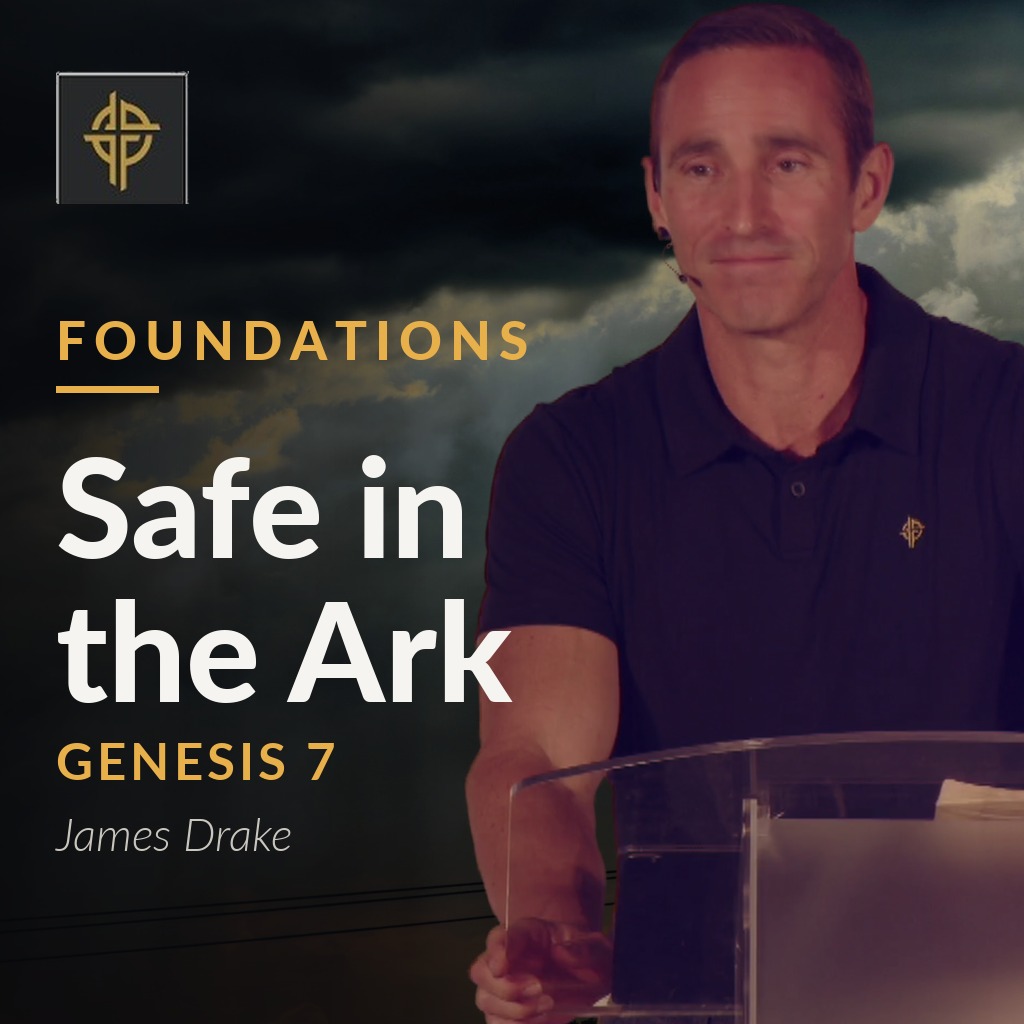
James Drake is the Lead Pastor of Christchurch Miami and a U.S. Army chaplain who has served alongside Special Forces in combat environments. He writes from his convictions as a pastor, husband, father, and follower of Jesus Christ. The views expressed are personal and do not represent the Department of Defense or the U.S. Army.
Frequently asked questions
What does it mean that Christ is King?
Should Christians be involved in politics?
What is the difference between political engagement and political idolatry?
Where should Christians go from here after a disappointing election?
Pastoral writing from the team at Christchurch Miami — a faith family on mission in Kendall, Miami.