


A while back David McCloud fell into one of those YouTube rabbit holes that starts somewhere ordinary and ends somewhere you did not plan on. Where he landed was a long BBC documentary by Louis Theroux, filmed right here — inside the three Miami-Dade jails. TGK and the others.
Two hours later he was still watching, and what he mostly felt was that he never wanted to be there. He sent it to his sons. Listen. Don't end up here. This is not a place you want to be. He is honest about why that lands the way it does: as a teenager he threw pumpkins off a parking garage with a few friends. Not his smartest moment. He was about to find out what the inside of that building looked like, and he got spared.
Hold that picture, he said, and then remember that a Roman prison in Paul's day made the worst of it look like nothing.
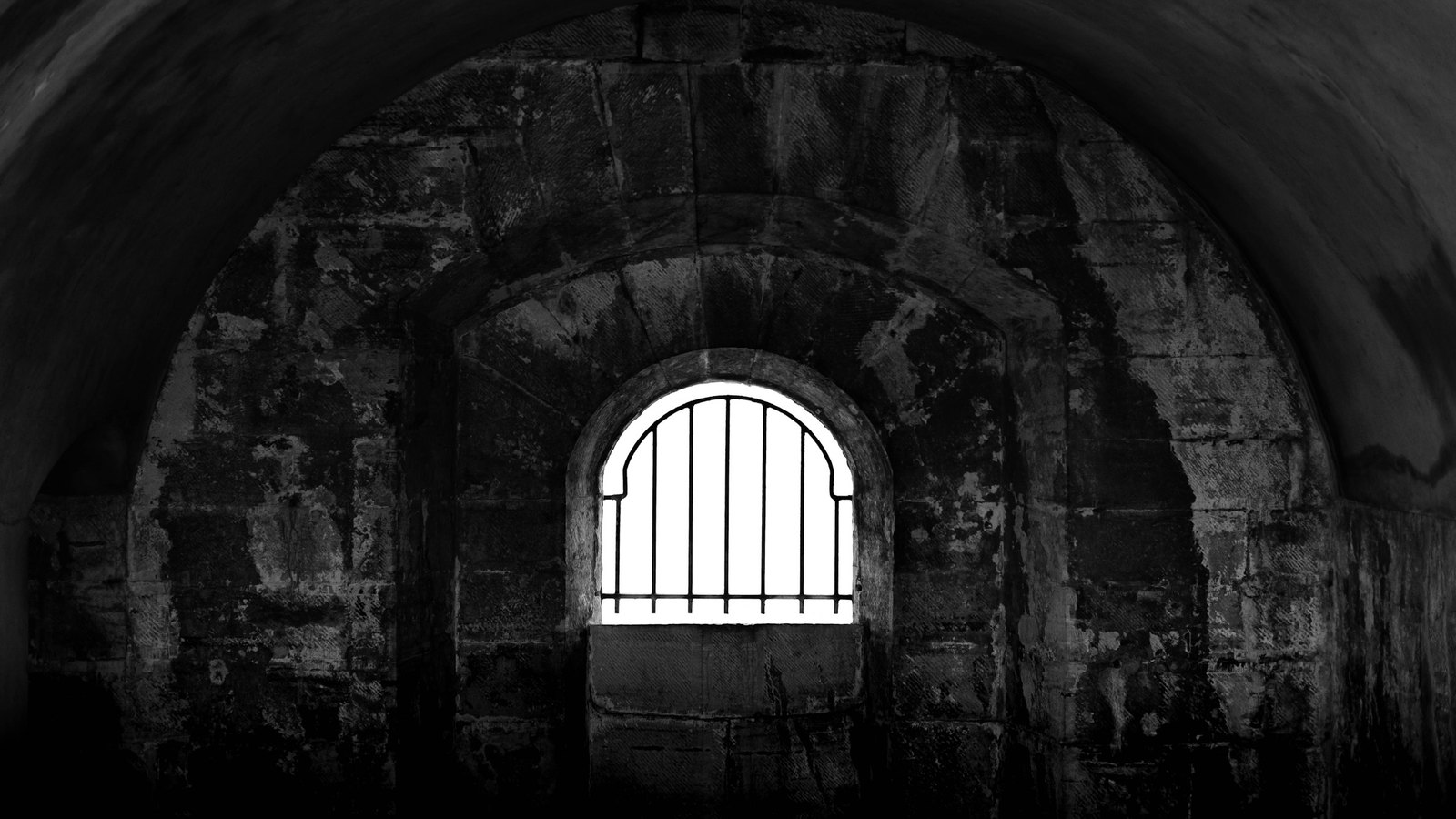
There was no food unless someone from the outside carried it in. There was essentially no plumbing. And there was no idea in the culture that a prisoner's life had value at all — prisoners were discarded. It was the worst place in the ancient world to be a human being.
And that is where Colossians was written. Every word of this letter came out of that room, from a man who says plainly that he is in chains. David imagines it as a noisy book to write, iron clanking every time the hand moved.
Put yourself in Paul's sandals for a second. What would you be praying?
"I think I would be praying automatically: please get me out of here. Please protect me. Please help me, help me, help me."
Read what Paul actually asks for. It is three things, and it is the whole sermon.
He looks up
Devote yourselves to prayer, being watchful and thankful. And pray for us, too, that God may open a door for our message, so that we may proclaim the mystery of Christ, for which I am in chains.
Paul does not ask God to change his circumstances. He asks God to use them. Open a door for the message — not the cell door.
David called what that requires a recalibration. If you actually believe what Scripture says about God — sovereign, all-knowing, in control of everything — then you land somewhere uncomfortable and steadying at the same time: God is not making a mistake with the place he has put you.
Most of us do the opposite by reflex. The marriage is not what we pictured. The job we worked years to get is mundane and full of people we did not choose. We wake up frustrated and live in a loop of it.
And Paul did not even deserve his. He stole nothing. He broke no law. He is an innocent man in the worst place in the world, and he does not whine about it and he does not sink under it. He says: God, I am here. You put me here. How do I use this?
He looks out
There is a story David told about a cathedral going up in medieval Europe. Three men, all doing the identical job, chipping away at stone.
Someone asks the first what he is doing. I'm breaking rocks for the building. The second: I'm trying to make a living. The third one says, I am building a sanctuary, and one day people are going to hear about God in this place.
Same rocks. Same hands. Same day. Three completely different jobs.
Paul looks around a Roman prison and sees every man in it as someone who could hear the gospel. The chains themselves become the opportunity.
And that, David said, is not a technique. It is what Jesus did first. Fully God and fully man, he came here by choice, took on the form of a servant, and served all the way to a cross. In the garden he sweat drops of blood and asked, if it is possible, let this cup pass from me. The weight of what was coming was overwhelming. He went anyway. He took the beatings, the nails, the shame, and underneath all of it the full weight of the wrath of God — so that we would not have to.
"That is why I do what I do," David said. "Jesus called me to do something that he was absolutely willing to do himself."
He looks around
Then Paul does something we usually skip. He starts listing names.
You know the feeling. Reading the Bible in a year, you hit a page of names and it is a free day — so-and-so begat so-and-so, great, done, fast. There are names here you know, like Luke, and names David flatly declined to try pronouncing.
But look at why they are there. The letter closes with a long list of people because Paul has no intention of doing any of this alone. He is essentially confessing it: I am not complete in myself. I need friends. I need people. I need the church.
One name stopped David. Verse 10 — Aristarchus.
Aristarchus appears five times in the New Testament. He never says a single recorded word. But every single time he is mentioned, he is there, and he is there in a hard place: fellow prisoner, fellow traveler, fellow sufferer. When Paul had the moments where he could have quit, Aristarchus was in the room.
David calls that the ministry of staying. His presence is a present.
So you need to be that for someone. And — this is the harder half — you need an Aristarchus or two or three of your own, which means letting people in instead of pretending you can carry it by yourself.
That makes this community a bigger thing than showing up on a Sunday. Not just the one-year anniversary with the bounce houses and the food trucks, but the Tuesday when the bounce houses are gone and somebody needs somebody.
David would not soften the landing, and he did not pretend to have a magic wand. There is real value and real significance in the place God has put you. Your circumstances are a privilege. And yes — there will be suffering. There will be down days, difficult stretches, hurt you caused and hurt somebody else caused you. He does not ask you to walk it alone.
Look up. Look out. Look around.
Jesus did all three first.